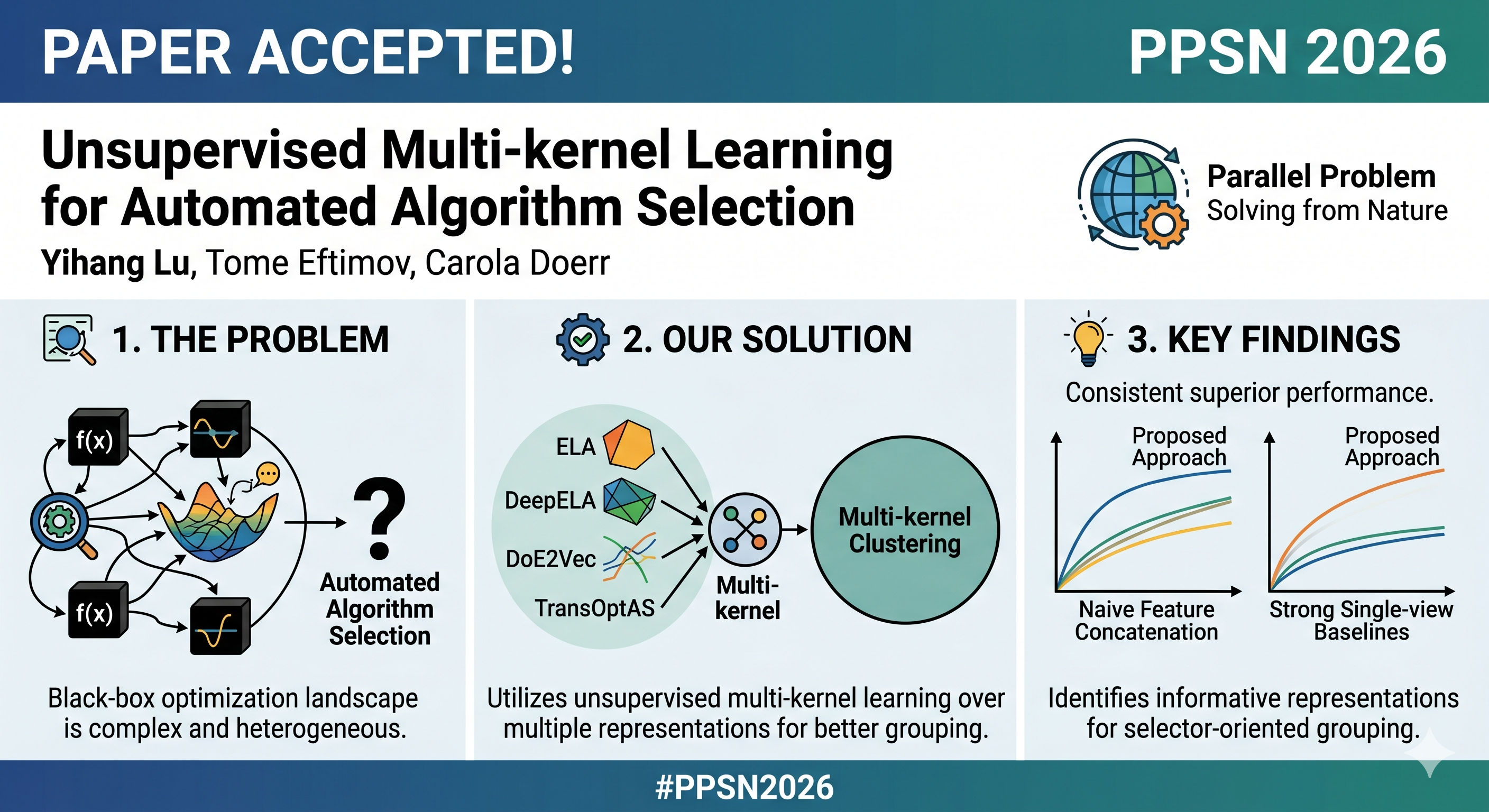
Paper Accepted at PPSN 2026 on Unsupervised Automated...
- 27/05/2026: 12:15
The paper “Unsupervised Multi-kernel Learning for Automated Algorithm Selection” by Yihang Lu, Tome Eftimov, and Carola Doerr has been accepted at the Parallel Problem Solving from Nature conference. The work introduces an unsupervised multi-kernel clustering framework for automated algorithm selection in black-box optimization, showing improved performance over strong baselines while identifying the most informative landscape representations for selector-oriented grouping.

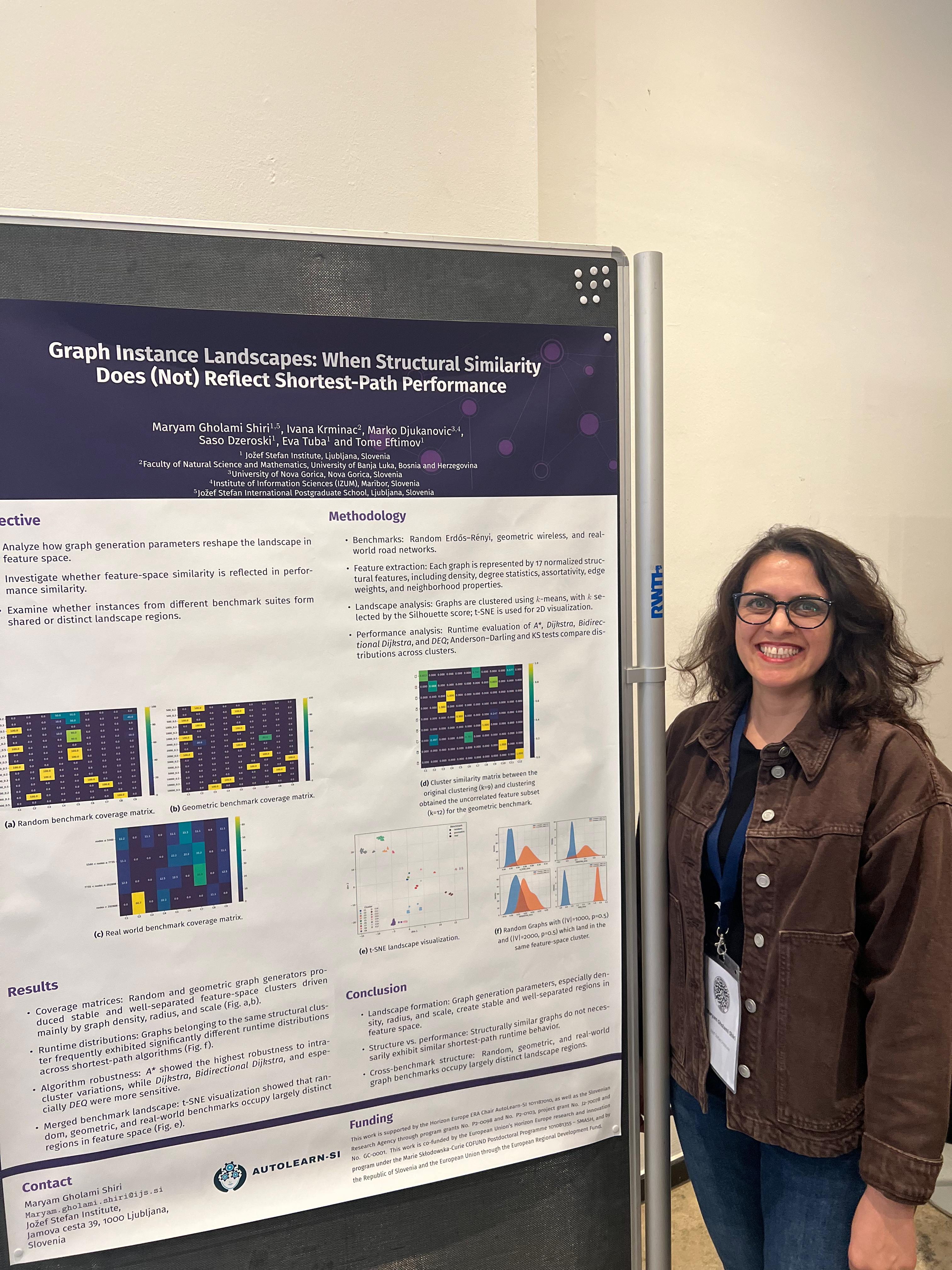
Maryam Gholami Shiri presented the paper “Graph Instance Landscapes: When Structural Similarity Does (Not) Reflect Shortest-Path Performance” at COSEAL 2026. The work explores structure-aware benchmarking of shortest-path algorithms, showing that structurally similar graph instances do not necessarily exhibit similar runtime behavior across different shortest-path solvers.
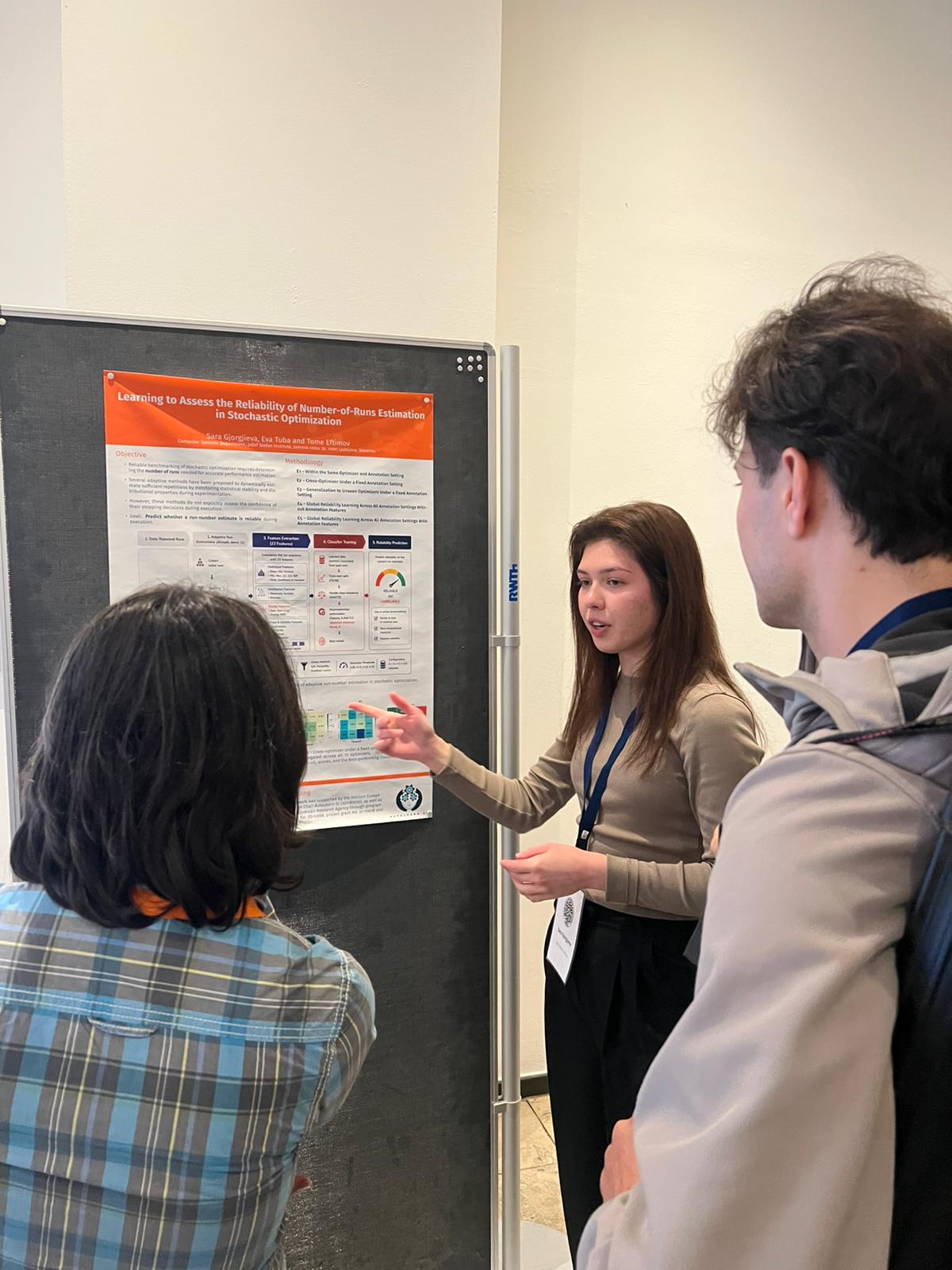
Sara Gjorgjevikj presented our research at COSEAL 2026 on learning-based reliability assessment for adaptive number-of-runs estimation in stochastic optimization benchmarking. Using over 132,000 Nevergrad runs on the COCO benchmark suite, the study demonstrates how ensemble learning models can help identify potentially unsafe early stopping decisions while reducing unnecessary computational cost.
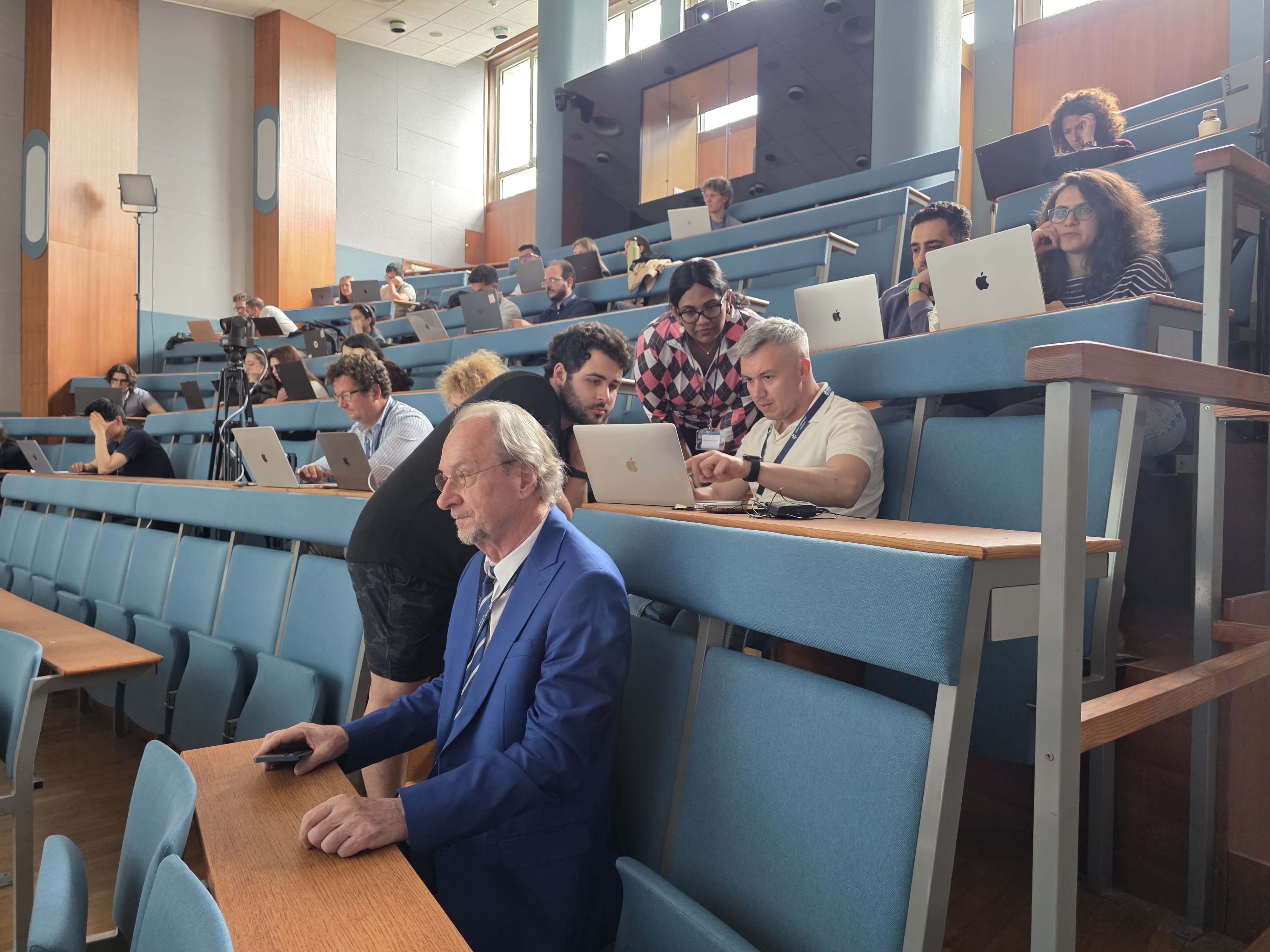
The AI and Data Privacy and Security Training at the Jožef Stefan Institute brought together 50+ participants for a hands-on exploration of decentralized, privacy-preserving AI and a policy discussion on the EU AI Act led by Oshani Seneviratne, Fernando Spadea, and Polona Pičman Štefančič.
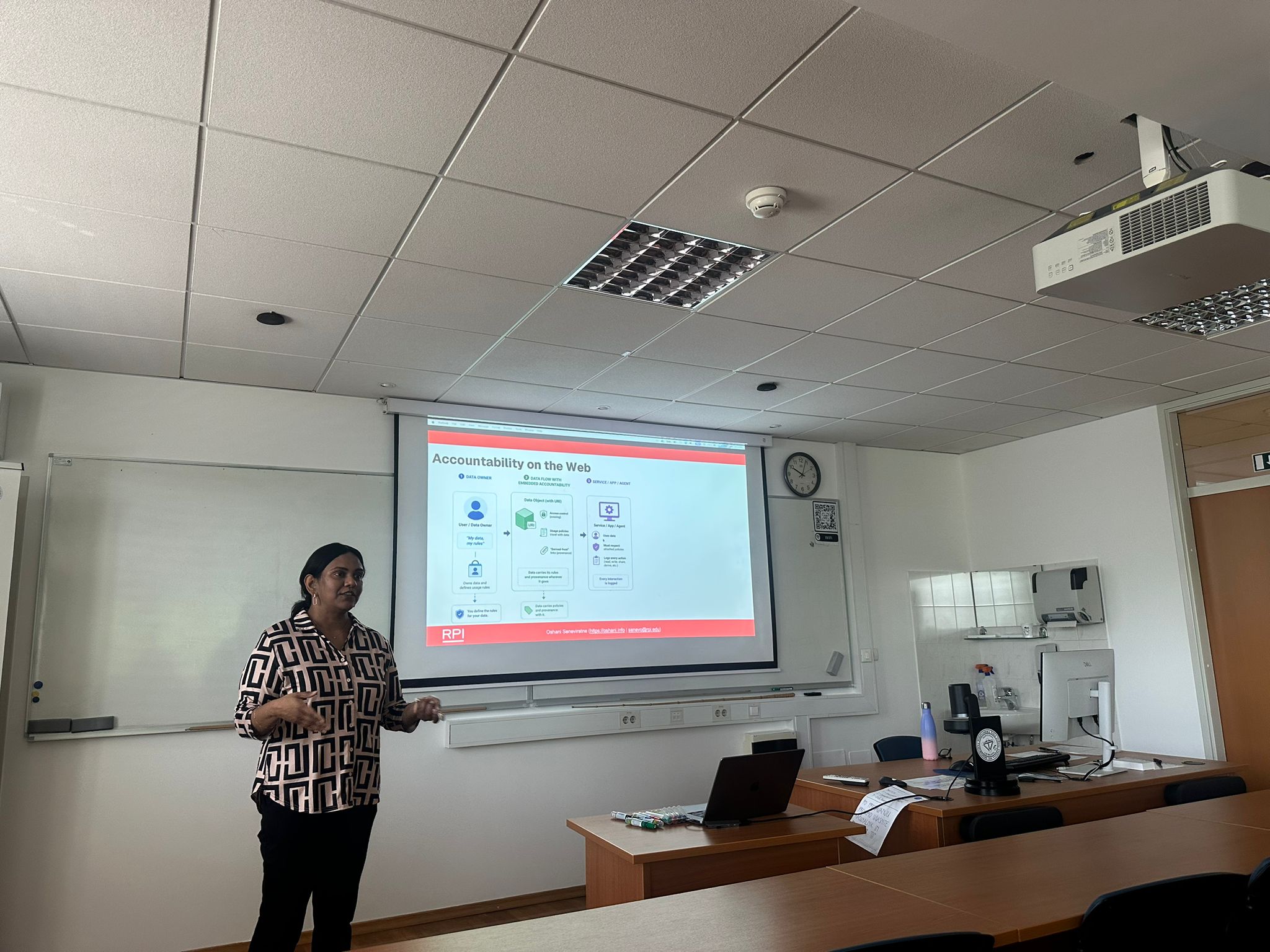
We hosted an invited talk by Oshani Seneviratne (Rensselaer Polytechnic Institute**), presenting a forward-looking vision of decentralized AI ecosystems that are resilient, accountable, and user-centric.
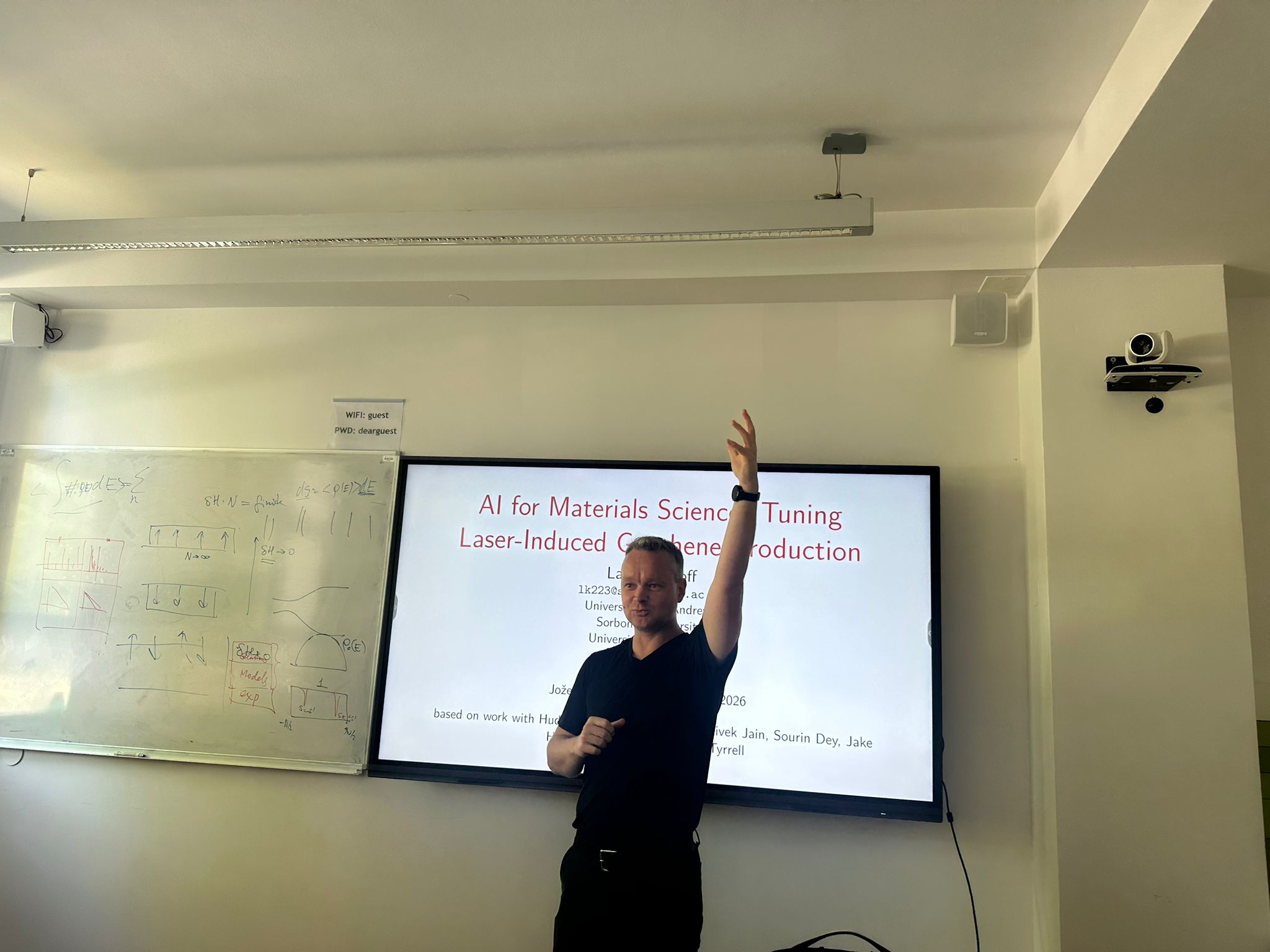
Lars Kotthoff (University of St Andrews) delivered a guest lecture at the Jožef Stefan Institute on applying AI and Bayesian optimization to improve laser-induced graphene production, achieving up to twofold performance gains over existing methods. The talk highlighted the potential of automated machine learning in materials science and sparked engaging discussions with participants.
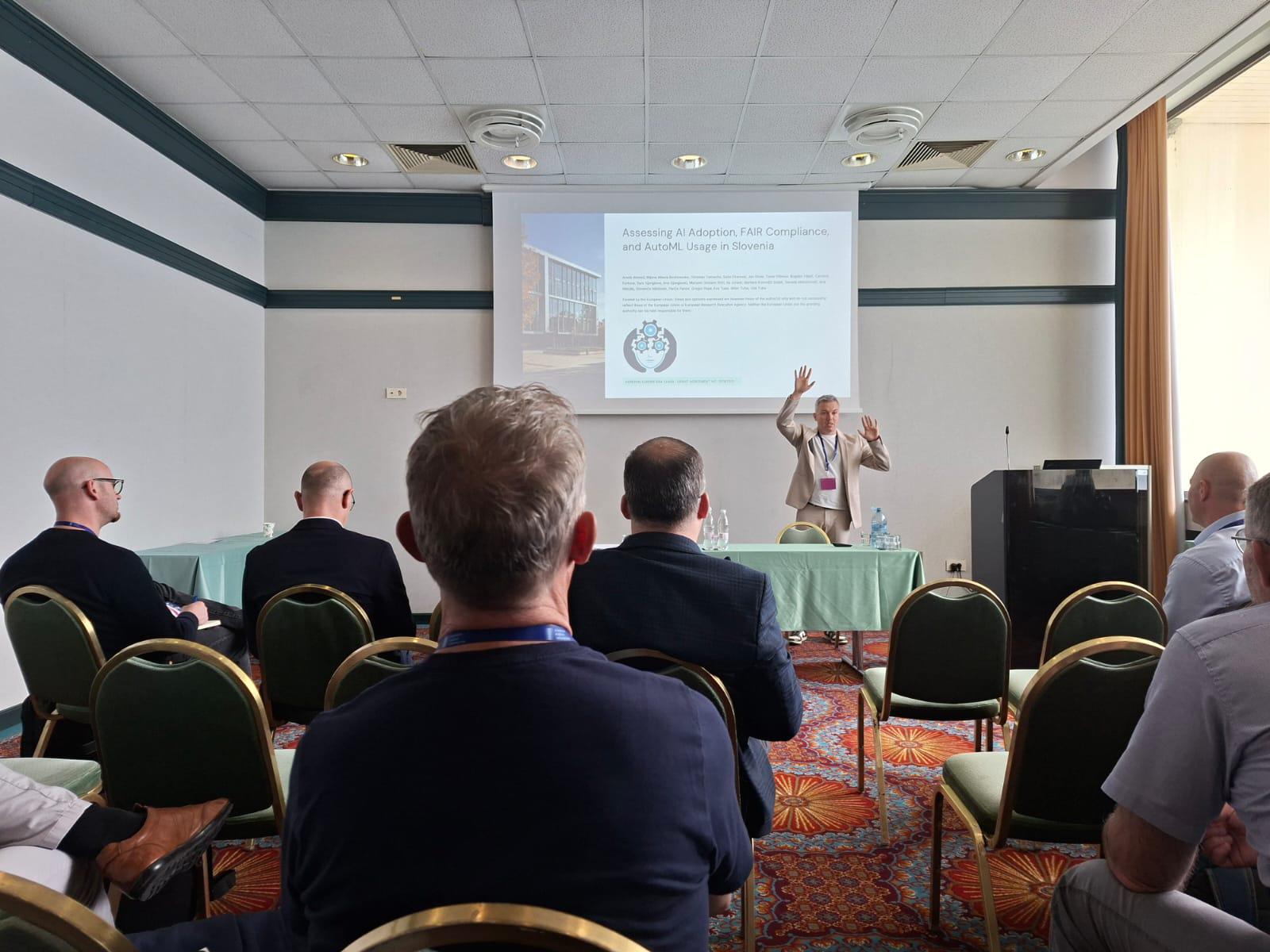
At Dnevi Slovenske Informatike (DSI) 2026, Tome Eftimov, together with Ana Nikolić and Matevž Ogrinc, presented insights from the AutoLearn-SI ERA Chair Project, showing that while AutoML is widely known, only 27% of stakeholders have experimented with it in practice.
They also shared findings from the DATA-TRUST project, revealing that only 27.3% routinely evaluate bias in AI workflows, and introduced the upcoming AutoML Conference 2026 in Ljubljana.